
Is the ground sandy?
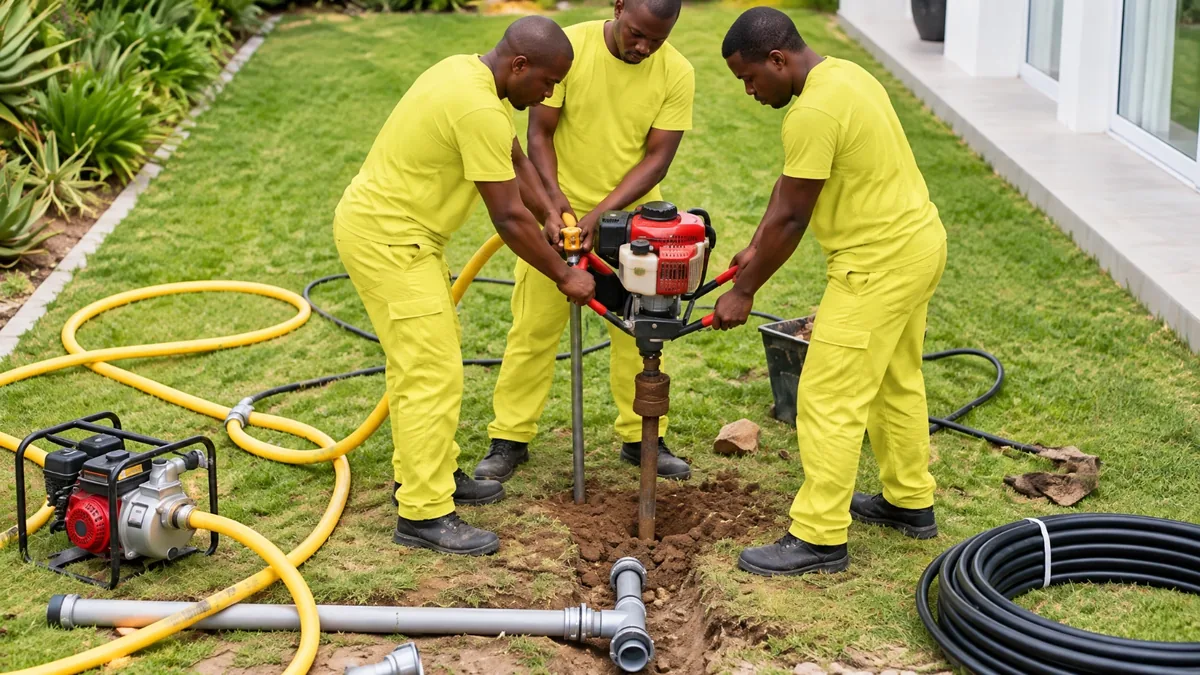
Wellpoint Drilling South Africa is the part of the job that gets the pipe into the ground. Most points are jetted rather than drilled: water under pressure cuts through the sand and the pipe follows it down. Compare quotes on depth, method and what happens if the hole comes up dry.
Get jetting quotes for your own ground conditions.
Get the Best QuoteHow a Point Is Sunk
- Jetting. High pressure water cuts a hole and the pipe is fed down behind it.
- Driving. The point is hammered down, used in firm sand and shallow water.
- Augering. A hole is bored first, then the point is set and packed.
- The screen. The slotted length at the bottom that lets water in and keeps sand out.
- Gravel packing. Coarse sand or gravel around the screen so it does not silt up.
- Development. Pumping hard until the water clears, which sets the final yield.
What Decides How Deep It Goes
- The water table. The point stops when the screen sits well below standing water.
- Seasonal drop. Sinking deeper than today's water level allows for a dry summer.
- Suction limit. Past about eight metres a surface pump cannot lift the water.
- Ground layers. A clay band can stop a jetted point short of the water.
- The pump chosen. A submersible changes what depth is worth reaching.
When Jetting Will Not Work
- Rock. Water jetting cuts sand, not stone. That is a drilling rig's job.
- Heavy clay. The hole closes behind the pipe and the screen silts up.
- Rubble fill. Old building rubble deflects and jams the point.
- No water access. Jetting needs a water supply on site to work at all.
- Deep water tables. Inland sites are often borehole ground rather than point ground.
Wellpoint Drilling Prices
Ballpark jetting and sinking figures so you can check a quotation.
| Item | Ballpark price |
|---|---|
| Jetted point, up to 6 metres | R2,800 - R6,000 |
| Jetted point, 6 to 9 metres | R3,500 - R7,500 |
| Jetted point, 9 to 12 metres | R6,000 - R12,000 |
| Each extra metre past 12 | R450 - R1,100 |
| Driven point, shallow sand | R2,200 - R5,000 |
| Gravel pack and development | R800 - R2,400 |
| Dry hole, no water found | R1,500 - R4,000 |
Prices JUST UPDATED. Ballpark figures, rounded, excluding VAT. They reflect typical South African wellpoint, pump and water treatment rates. They are not our prices or quotations, and no provider is bound by them. Confirm what each quotation includes, such as travel, the depth allowed for, the dry hole fee, pipework and minimum callout fees.
Compare depth allowances and dry hole terms side by side.
Get the Best QuoteWhat Affects the Price
- Depth reached. The main driver, and the reason to ask for a rate per metre.
- Sand or gravel. Clean sand jets fast; gravel bands slow it right down.
- Water on site. Jetting without a municipal tap means carting water in.
- Access. Gear carried through a narrow side gate costs labour time.
- Screen length. A longer screen gives more yield and costs more pipe.
- Number of attempts. A second position after a dry hole is usually charged separately.
What to Include in Your Request
- The address. Local ground conditions are most of the quotation.
- Any known depth. What a neighbour's point or an old point on the plot reached.
- Where the point should go. And whether a vehicle can reach it.
- Whether there is a tap. Jetting needs water pressure on site.
- What the water is for. It decides the screen length and the pump.
- Your dry hole expectation. Ask them to price it rather than leave it open.
Before the Jetting Starts
- Ask for a rate per metre. A flat price hides what happens when the water sits deeper.
- Mark the services first. Water, sewer and electrical runs are what a point hits.
- Pick the spot for the pump, not the lawn. Long suction runs cost yield.
- Expect mess. Jetting returns sand and water, and it goes somewhere.
- Get the depth recorded. You will need it for the pump and for registration.
Wellpoint Drilling FAQs
Is a wellpoint drilled or jetted?
Most are jetted. Water under pressure cuts a hole through the sand and the pipe follows it down, which is quicker and cheaper than drilling and needs much smaller gear. Driving and augering are used in some ground. True drilling, with a rig, is what a borehole needs.
How long does the sinking itself take?
In clean sand, often two to four hours to reach water. Development, which is pumping the point until it runs clear, adds an hour or two and matters more than most people expect: an underdeveloped point gives sandy water and wears the pump out.
What if the point hits clay?
A jetted point cannot be pushed through much clay. The installer will usually try a different position on the property. If the clay is everywhere, the honest answer is that the site wants a borehole, and a good installer will say so rather than keep charging for attempts.
Can two points be sunk on one property?
Yes, and it is common where one point does not give enough for both a garden and a pool. The second is cheaper than the first because the gear and the crew are already there. They need to be far enough apart not to draw each other down.
Does jetting damage the garden?
There is mess. Jetting pushes sand and water back up the hole and it has to run somewhere, so expect a muddy patch around the point and some water across the lawn. Agree beforehand where it drains and who clears up.
Drilling and jetting quotes come from the same providers listed on Wellpoint Installers SA who handle the pump and the connection.
Related Services
Get the Best Quote, Fast
Client Reviews
Powered by leaderr